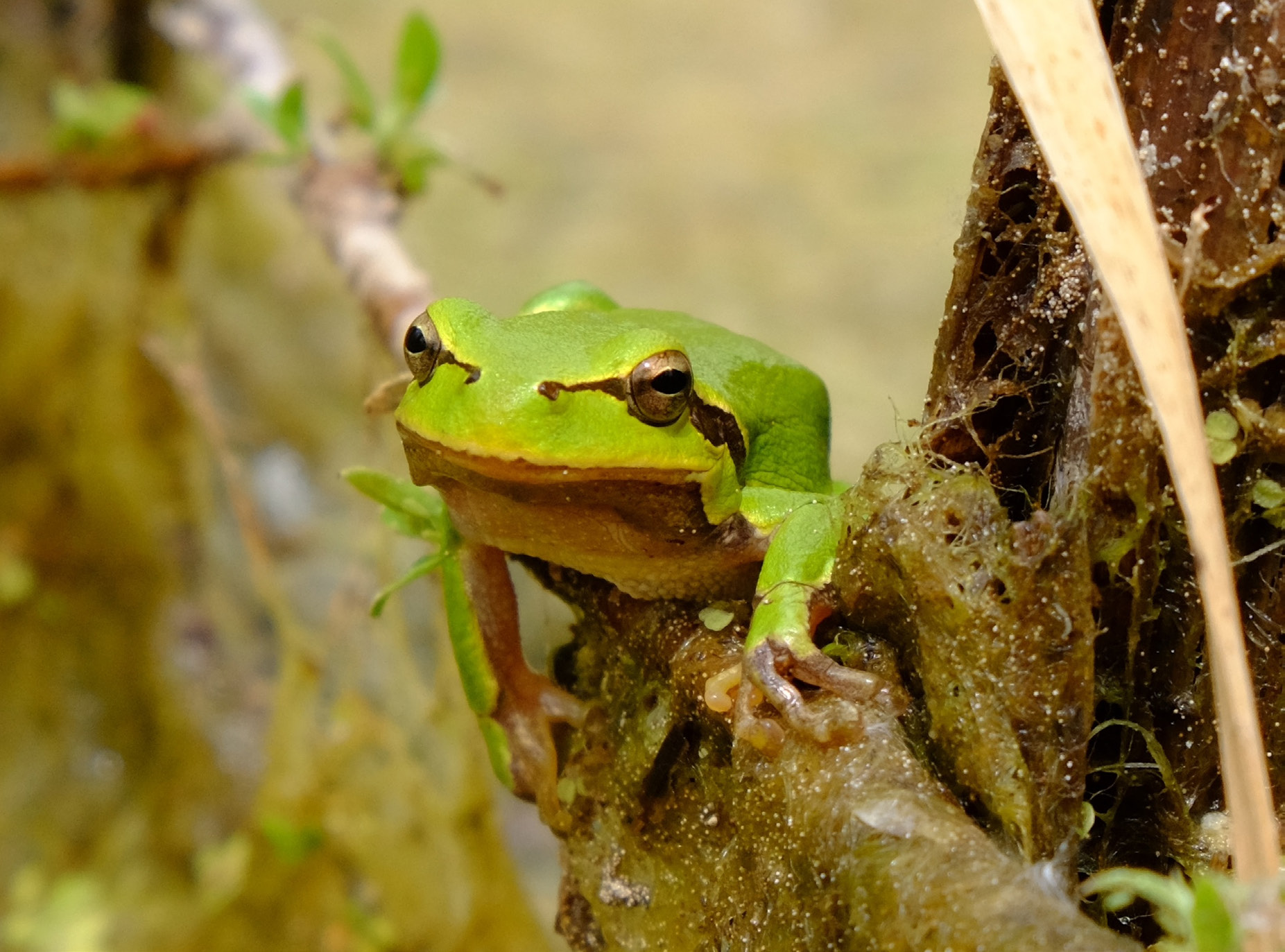
Respuestas eco-evolutivas frente a la radiación ionizante en anfibios de Chernobyl
DOI:
https://doi.org/10.65120/evo.10Descargas
Citas
Beresford, N. A., Fesenko, S., Konoplev, A., et al. (2016). Thirty years after the Chernobyl accident: What lessons have we learnt? Journal of Environmental Radioactivity, 157, 77–89. DOI: https://doi.org/10.1016/j.jenvrad.2016.02.003
Beresford, N. A., Gashchak, S., Wood, M. D., et al. (2023). Mammals in the Chornobyl Exclusion Zone’s Red Forest: A motion-activated camera trap study. Earth System Science Data, 15, 911–920. DOI: https://doi.org/10.5194/essd-15-911-2023
Beresford, N., Horemans, N., Copplestone, D., et al. (2020). Towards solving a scientific controversy – The effects of ionising radiation on the environment. Journal of Environmental Radioactivity, 211, 106033. DOI: https://doi.org/10.1016/j.jenvrad.2019.106033
Burraco, P. y Orizaola, G. (2022). Ionizing radiation and melanism in Chornobyl tree frogs. Evolutionary Applications, 15, 1469–1479. DOI: https://doi.org/10.1111/eva.13476
Burraco, P., Bonzom, J.-M., Car, C., et al. (2021a). Lack of impact of radiation on blood physiology biomarkers of Chernobyl tree frogs. Frontiers in Zoology, 18, 33. DOI: https://doi.org/10.1186/s12983-021-00416-x
Burraco, P., Car, C., Bonzom, J.-M., et al. (2021b). Assessment of exposure to ionizing radiation in Chernobyl tree frogs (Hyla orientalis). Scientific Reports, 11, 20509. DOI: https://doi.org/10.1038/s41598-021-00125-9
Burraco, P., Gabor, C., Bryant, A., et al. (2024). Ionizing radiation has negligible effects on the age, telomere length, and corticosterone levels of Chornobyl tree frogs. Biology Letters, 20, 20240287. DOI: https://doi.org/10.1098/rsbl.2024.0287
Burraco, P., Salla, R. y Orizaola, G. (2023). Exposure to ionizing radiation and liver histopathology in the tree frogs of Chornobyl (Ukraine). Chemosphere, 315, 137753. DOI: https://doi.org/10.1016/j.chemosphere.2023.137753
Dadachova, E., Bryan, R. A., Howell, R. C., et al. (2008). The radioprotective properties of fungal melanin are a function of its chemical composition, stable radical presence and spatial arrangement. Pigment Cell & Melanoma Research, 21, 192–199. DOI: https://doi.org/10.1111/j.1755-148X.2007.00430.x
Deryabina, T. G., Kuchmel, S. V., Nagorskaya, L. L., et al. (2015). Long-term census data reveal abundant wildlife populations at Chernobyl. Current Biology, 25, 824–826. DOI: https://doi.org/10.1016/j.cub.2015.08.017
Galván, I., Bonisoli-Alquati, A., Jenkinson, S., et al. (2014). Chronic exposure to low-dose radiation at Chernobyl favours adaptation to oxidative stress in birds. Functional Ecology, 28, 1387–1403. DOI: https://doi.org/10.1111/1365-2435.12283
Geras’kin, S. A., Fesenko, S. V. y Alexakhin, R. M. (2008). Effects of non-human species irradiation after the Chernobyl NPP accident. Environment International, 34, 880–897. DOI: https://doi.org/10.1016/j.envint.2007.12.012
Møller, A. P. y Mousseau, T. A. (2006). Biological consequences of Chernobyl: 20 years on. Trends in Ecology and Evolution, 21, 200–207. DOI: https://doi.org/10.1016/j.tree.2006.01.008
Møller, A. P. y Mousseau, T. A. (2016). Are organisms adapting to ionizing radiation at Chernobyl? Trends in Ecology and Evolution, 31, 281–289. DOI: https://doi.org/10.1016/j.tree.2016.01.005
Orizaola, G. (2022). Amphibians in field radioecology: A review and perspective. En: M. D. Wood, C. E. Mothersill, G. Tsakanova, T. Cresswell y G. E. Woloschak (eds.), Biomarkers of Radiation in the Environment – Robust Tools for Risk Assessment (pp. 185–203). NATO Science for Peace and Security Series A: Chemistry and Biology. Springer. DOI: https://doi.org/10.1007/978-94-024-2101-9_12
Perino, A., Pereira, H. M., Navarro, L. M., et al. (2019). Rewilding complex ecosystems. Science, 26, eaav5570. DOI: https://doi.org/10.1126/science.aav5570